
#ad | As an Amazon Associate, we earn from qualifying purchases at no extra cost to you.
The Fire-Maple Nonstick Camping Frying Pan addresses a specific friction point in outdoor cooking: the need for a lightweight, portable surface that releases food easily without requiring heavy scrubbing. Its standout feature is the locking and folding handle mechanism, which allows the pan to latch securely for cooking and fold flat for compact storage, a design that significantly reduces the volume it takes up in a pack. However, a key limitation is its hard anodized aluminum construction, which, while durable, is not suitable for direct high-heat open flame searing or heavy metal utensil abuse, making it less ideal for traditional campfire purists. This product is best for backpackers and car campers who prioritize easy cleanup and even heating over raw searing power.
The Weight and Size Trade-Off
For backpackers, the decision to choose a nonstick camping frying pan often hinges on the balance between cooking capacity and pack weight. The Fire-Maple model weighs 262g and has a pan diameter of 194mm, which places it in a sweet spot for solo or small group cooking. This weight is significantly lower than the 1100g cast iron alternative listed in the comparison table, making it a far more viable option for long-distance hiking where every gram counts. The 0.9L capacity is sufficient for cooking eggs, pancakes, or a small portion of meat, but it is not large enough for cooking a full meal for a family of four in a single go.
🛒 Check Price on Amazon →✓ See today's price & reviews
The nonstick coating plays a crucial role in this weight calculation because it reduces the need for carrying large quantities of oil or butter. In a remote trail scenario, where water sources may be limited and cleanup is difficult, the ability to cook with minimal fat and rinse the pan with a small amount of water is a significant advantage. The hard anodized aluminum base provides a stable cooking surface that heats more evenly than typical camp skillets, leading to faster cook times. This efficiency means you spend less time at the stove, which is valuable when weather conditions are changing or when you are trying to maintain a steady pace on a long hike.
Hard Anodized Aluminum Construction
The use of hard anodized aluminum is a specific engineering choice that impacts both durability and heat distribution. Unlike standard aluminum, which is soft and prone to warping, hard anodized aluminum has a surface that is more resistant to wear and corrosion. This material choice means the pan can withstand the rigors of being packed with other gear without easily denting or deforming. The stainless steel handle adds to the overall durability, ensuring that the locking mechanism remains robust even after repeated folding and unfolding.
In practice, this construction allows the pan to handle accidental contact with metal utensils better than standard Teflon-coated pans, which can be easily scratched. While the manufacturer advises against using abrasive tools, the hard anodized surface is more forgiving if a metal spoon or fork is used in a pinch. This resilience is particularly important in the field, where you may not have access to the soft silicone or wooden utensils you would use at home. The even-heating property of the aluminum base ensures that food cooks uniformly, reducing the risk of burnt edges and undercooked centers, a common issue with thinner, less expensive camping cookware.
Folding Handle Mechanics
The locking and folding handle is the defining feature of this product’s portability. The handle can flip up and securely latch, allowing you to carry the pan by the handle or hang it from a hook without the risk of it folding unexpectedly. This secure latching mechanism is critical for safety, as a handle that slips or folds during cooking could lead to burns or spilled food. When finished cooking, the handle folds away, reducing the overall length of the pan from 327.5mm to a much more compact profile.
This folding design allows the pan to nest with other camping cookware, such as pots and bowls, maximizing the use of space in a backpack or car trunk. The unfolded size of 327.519444.5mm is manageable for most cooking stoves, but the folded size makes it easy to store in a side pocket or alongside other gear. The inclusion of a protective bag, as noted in the comparison table, further enhances its portability by protecting the nonstick surface from scratches during transport. This thoughtful design detail ensures that the pan remains in good condition over multiple trips, extending its lifespan and maintaining its nonstick performance.
Damp Conditions and Coating Integrity
One of the most honest limitations of any nonstick camping frying pan is its vulnerability to damp and high-heat environments. In the UK, where damp conditions are common, storing a nonstick pan in a wet pack can lead to moisture trapping between the pan and other gear. While the hard anodized aluminum is resistant to corrosion, the nonstick coating can be compromised if the pan is not dried properly after use. This is a specific risk for backpackers who may not have the time or space to thoroughly dry their cookware after a rainy night.
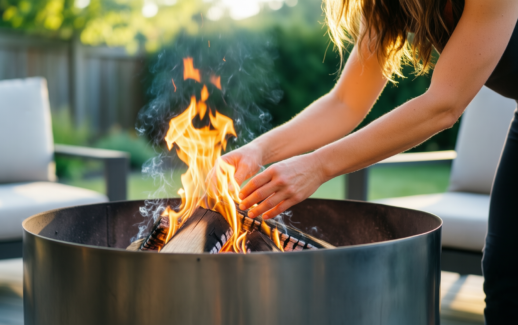
Furthermore, the nonstick coating is not designed for high-heat searing or direct flame exposure. If you are a traditional campfire cook who relies on open wood fires, this pan is not the right choice. The high temperatures of a wood fire can degrade the nonstick coating over time, leading to flaking and a loss of nonstick performance. The Fire-Maple pan is best suited for use with portable gas stoves or low-heat campfires where the temperature can be controlled. This limitation is important to consider if you are planning to use the pan for high-heat cooking techniques, as it may not perform as expected and could be damaged.
Open Fire vs. Gas Stove
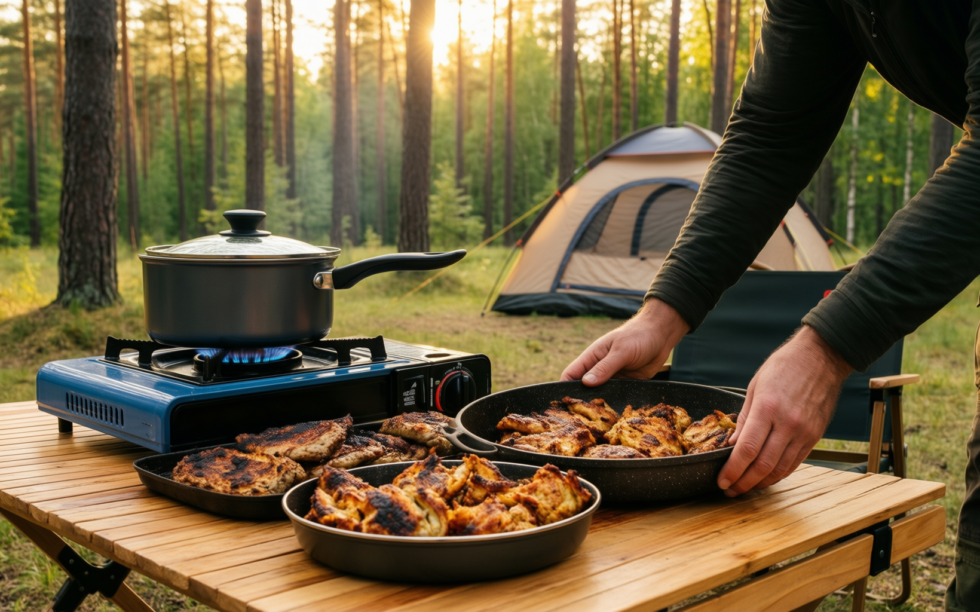
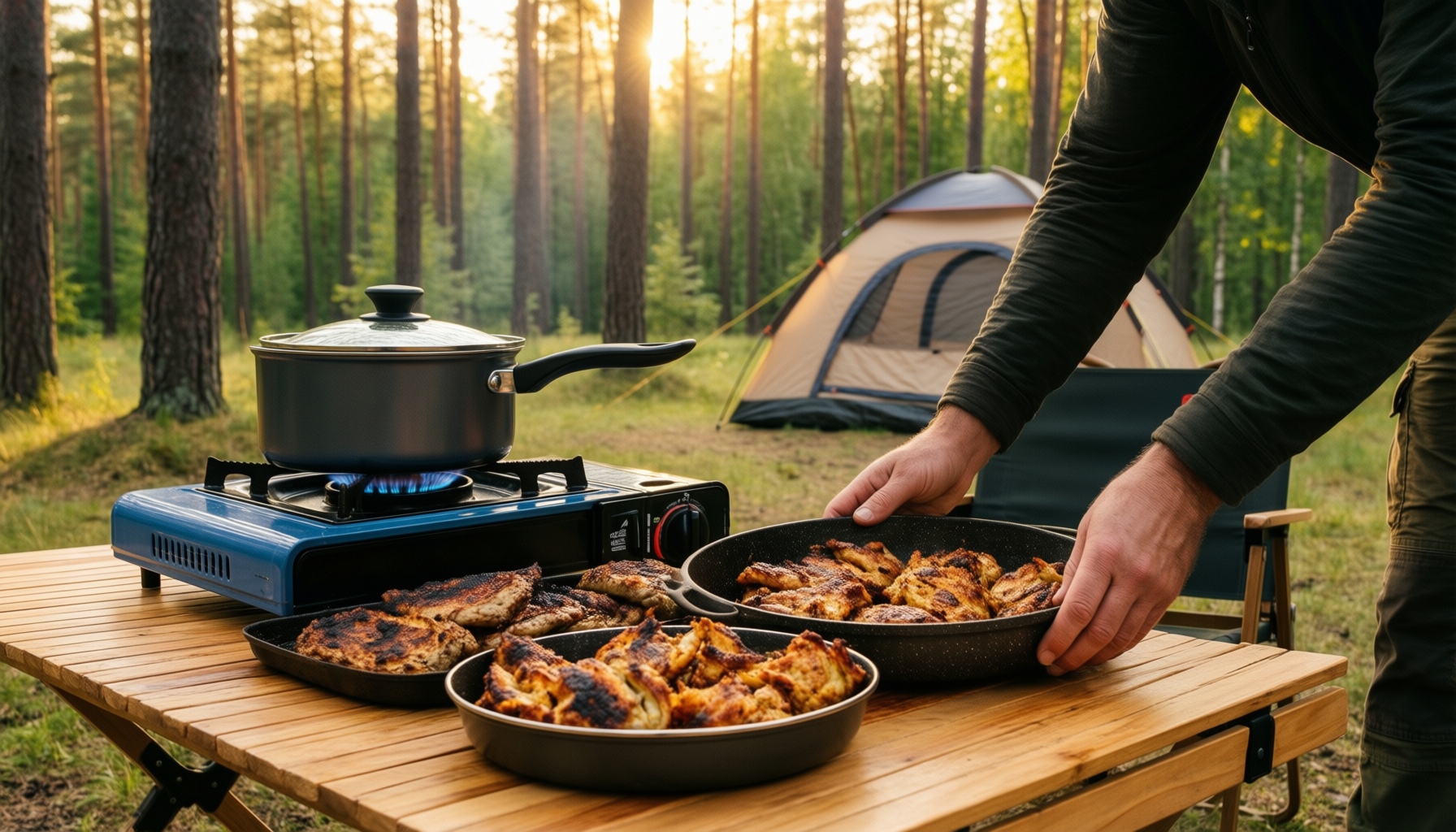
The distinction between open fire and gas stove cooking is critical when choosing a nonstick camping frying pan. Open fires produce uneven heat and can reach temperatures that exceed the limits of nonstick coatings. In contrast, gas stoves provide a more controlled and consistent heat source, which is ideal for nonstick cookware. The Fire-Maple pan is designed to work best with gas stoves, where the heat can be adjusted to prevent the coating from overheating. This makes it a better choice for car campers who have access to reliable gas stoves than for backpackers who rely on small canister stoves or open fires.
The even-heating property of the hard anodized aluminum base is particularly beneficial when using a gas stove, as it ensures that the heat is distributed uniformly across the cooking surface. This reduces the risk of hot spots, which can cause food to burn in some areas while remaining undercooked in others. The locking handle also provides a secure grip, which is important when cooking over a gas stove where the pan may need to be moved or tilted. This combination of features makes the pan a reliable choice for a wide range of cooking tasks, from frying eggs to sautéing vegetables.
Storage in Humid Environments
Storing a nonstick pan in a humid environment requires careful attention to prevent moisture damage. The hard anodized aluminum is resistant to rust, but the nonstick coating can be affected by prolonged exposure to moisture. To prevent this, it is important to dry the pan thoroughly after each use and store it in a dry place. The protective bag included with the pan can help to keep moisture out, but it is not a substitute for proper drying. Backpackers should consider using a small towel or cloth to wipe down the pan after each use, especially in damp conditions.
The folding handle also plays a role in storage, as it allows the pan to be packed tightly without taking up too much space. However, the handle should be fully latched before packing to prevent it from folding unexpectedly and damaging the pan or other gear. The stainless steel handle is resistant to corrosion, but it should still be dried to prevent any potential moisture buildup. By taking these simple steps, you can ensure that the pan remains in good condition and continues to perform well over multiple trips.
Cleaning and Maintenance Realities
Cleaning a nonstick camping frying pan after a rainy night is a specific challenge that requires a different approach than cleaning a cast iron or carbon steel pan. The nonstick coating makes it easy to rinse off food residue with a small amount of water, but it also means that the pan is more susceptible to damage from abrasive sponges or harsh detergents. The Fire-Maple pan is designed to be cleaned with a soft cloth or sponge and mild soap, which is a simple process that can be done with limited water sources. This ease of cleanup is a significant advantage for backpackers who may not have access to a full sink or hot water.
The hard anodized aluminum base is also easy to clean, as it does not require seasoning or special care. Unlike cast iron, which needs to be dried and oiled after each use to prevent rust, the aluminum pan can be rinsed and dried without any additional steps. This makes it a more convenient option for campers who want to minimize the time and effort spent on cleanup. The nonstick coating also helps to prevent food from sticking, which reduces the need for scrubbing and makes the pan easier to maintain over time.
Rinsing with Limited Water
In a remote trail scenario, water may be a limited resource, making the ease of cleanup a critical factor. The Fire-Maple pan’s nonstick coating allows you to rinse off food residue with a small amount of water, which is a significant advantage over pans that require scrubbing. The hard anodized aluminum base is also easy to rinse, as it does not absorb water or require special cleaning agents. This makes the pan a practical choice for backpackers who need to conserve water and minimize the time spent on cleanup.
The folding handle also makes it easy to hold the pan while rinsing, as it can be latched securely to prevent it from slipping. The protective bag can be used to store the pan after cleaning, keeping it dry and protected from scratches. By taking these simple steps, you can ensure that the pan remains in good condition and continues to perform well over multiple trips. The ease of cleanup is a key feature that makes this pan a practical choice for a wide range of outdoor cooking scenarios.
Avoiding Abrasive Damage
To maintain the nonstick surface over multiple trips, it is important to avoid using abrasive sponges or harsh detergents. The nonstick coating is designed to be durable, but it can be damaged by rough cleaning tools. The Fire-Maple pan is best cleaned with a soft cloth or sponge and mild soap, which is a simple process that can be done with limited water sources. The hard anodized aluminum base is also easy to clean, but it should be treated with the same care to prevent any potential damage.
The use of metal utensils should also be avoided, as they can scratch the nonstick surface. While the hard anodized aluminum is more resistant to scratches than standard aluminum, it is still susceptible to damage from sharp or rough utensils. By using soft utensils and cleaning the pan gently, you can ensure that the nonstick coating remains intact and continues to perform well over time. This attention to detail is important for maintaining the longevity of the pan and ensuring that it remains a reliable tool for outdoor cooking.
Who Should Skip This
Despite its many advantages, the Fire-Maple Nonstick Camping Frying Pan is not the right choice for every type of camper. If you are a traditional campfire cook who relies on open wood fires for high-heat searing, this pan is not suitable. The nonstick coating is not designed to withstand the extreme temperatures of a wood fire, and using it in this way can lead to coating degradation and a loss of nonstick performance. The pan is best suited for use with portable gas stoves or low-heat campfires where the temperature can be controlled.
Additionally, if you are looking for a pan that can be used with metal utensils without any risk of damage, this pan is not the right choice. While the hard anodized aluminum is more resistant to scratches than standard aluminum, it is still susceptible to damage from sharp or rough utensils. If you prefer to use metal utensils for their durability and ease of cleaning, you may want to consider a cast iron or carbon steel pan instead. These pans are more resistant to damage and can be used with a wider range of utensils, but they require more maintenance and are heavier.
High-Heat Searing Enthusiasts
For campers who enjoy high-heat searing, the Fire-Maple pan is not the ideal choice. The nonstick coating is not designed to withstand the high temperatures required for searing, and using it in this way can lead to coating degradation. If you are looking for a pan that can be used for high-heat cooking, you may want to consider a cast iron or carbon steel pan instead. These pans can withstand high temperatures and are ideal for searing meat or vegetables, but they are heavier and require more maintenance.
The even-heating property of the hard anodized aluminum base is not as effective for high-heat searing as it is for lower-heat cooking. The pan is best suited for tasks that require even heating, such as frying eggs or sautéing vegetables. If you are looking for a pan that can be used for a wide range of cooking techniques, including high-heat searing, you may want to consider a different type of cookware. The Fire-Maple pan is a great choice for easy cleanup and even heating, but it is not the best option for high-heat cooking.
Metal Utensil Users
If you prefer to use metal utensils for their durability and ease of cleaning, the Fire-Maple pan is not the right choice. The nonstick coating is susceptible to damage from metal utensils, which can scratch the surface and reduce its nonstick performance. While the hard anodized aluminum is more resistant to scratches than standard aluminum, it is still susceptible to damage from sharp or rough utensils. If you are looking for a pan that can be used with metal utensils without any risk of damage, you may want to consider a cast iron or carbon steel pan instead.
These pans are more resistant to damage and can be used with a wider range of utensils, but they require more maintenance and are heavier. The Fire-Maple pan is a great choice for easy cleanup and even heating, but it is not the best option for campers who prefer to use metal utensils. By considering your specific cooking needs and preferences, you can choose the right pan for your outdoor cooking adventures. The Fire-Maple pan is a reliable and practical choice for many campers, but it is not the right fit for everyone.
Final Verdict
The Fire-Maple Nonstick Camping Frying Pan is a well-designed and practical choice for backpackers and car campers who prioritize easy cleanup and even heating. Its hard anodized aluminum construction, locking and folding handle, and nonstick coating make it a versatile and durable tool for outdoor cooking. The pan is best suited for use with portable gas stoves or low-heat campfires, where the temperature can be controlled to prevent coating degradation. It is not the right choice for traditional campfire cooks who rely on high-heat searing or for campers who prefer to use metal utensils. However, for those who value ease of use and portability, this pan is a reliable and practical addition to any camping cookware set.
🛒 Check Price on Amazon →✓ See today's price & reviews