
#ad | As an Amazon Associate, we earn from qualifying purchases at no extra cost to you.
The Bra Signature deep frying pan addresses the common issue of shallow skillets overflowing during braising or stewing. It features a 24cm diameter with sufficient depth for family-sized portions. Its standout feature is the 5.3mm thick triple diffuser base, which ensures rapid and even heat distribution across all hob types, including induction. However, the lack of a non-stick coating means it requires more diligent cleaning than coated alternatives. This pan is best for home cooks who prioritize durability and high-heat browning over low-maintenance convenience.
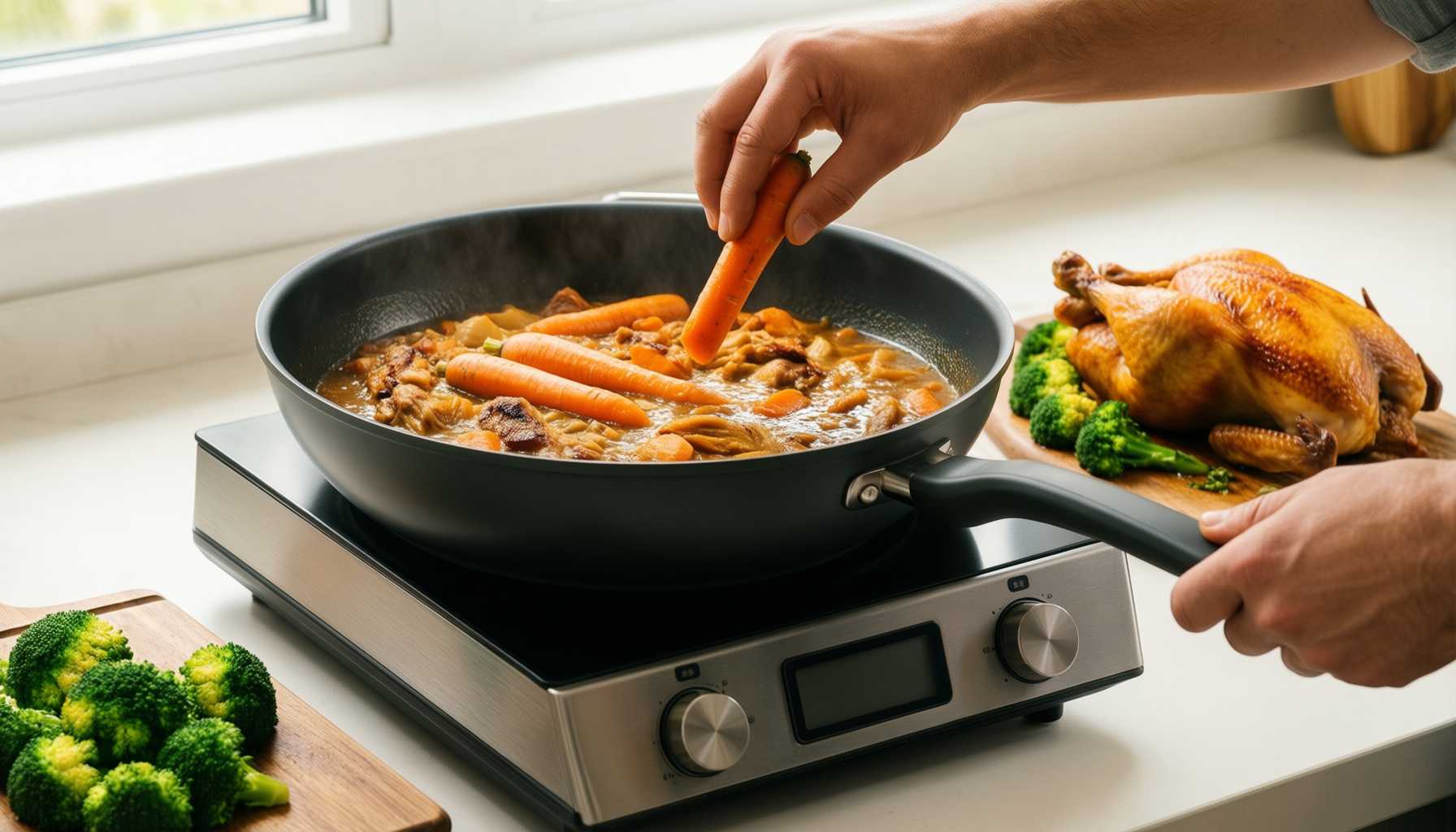
For slow-cooked dishes, the primary benefit of this pan is the elimination of sauce splatter. Standard 24cm skillets often have low rims that cause liquid to boil over when simmering stews, but the deeper walls here contain the contents effectively. This design allows you to braise larger cuts of meat without the constant need to reduce heat or scrape the rim.
🛒 Check Price on Amazon →✓ See today's price & reviews
The satin interior is designed to handle the transition from searing to simmering. When moving from high heat to a gentle simmer, the pan retains heat well enough to keep the stew moving without sticking. This thermal inertia is a direct result of the stainless steel construction, which stores heat more effectively than thinner aluminum pans. This design makes the cooking process smoother, especially when juggling multiple tasks in the kitchen.
Cooking Sunday Roast Dinners Without Spilling Sauce
The 24cm diameter is substantial enough to accommodate a full family portion of beef stew in a single go. Unlike typical shallow pans that force you to cook in batches, this capacity means you can sear the meat, add vegetables, and simmer the liquid all in one vessel. The depth provides enough room for the liquid to bubble vigorously without reaching the edge, which is crucial for maintaining the integrity of the dish.
Managing Heat During Long Simmers
The triple diffuser bottom plays a critical role in maintaining consistent temperatures during long cooks. Because the base is 5.3mm thick, it acts as a heat reservoir, preventing the hot spots that often occur with thinner bases. This means that even if your induction hob fluctuates slightly in power output, the pan itself stabilizes the temperature. The design ensures that the stew simmers evenly across the entire surface, rather than boiling furiously in the center and barely moving at the edges.
This stability is particularly useful when reducing sauces. You can leave the pan on a low heat for extended periods without worrying about scorching the bottom. The even heat distribution ensures that the reduction happens uniformly, allowing you to develop flavor without the risk of burning. It is a practical advantage for anyone who enjoys making rich, complex sauces from scratch.
Accommodating Larger Cuts of Meat
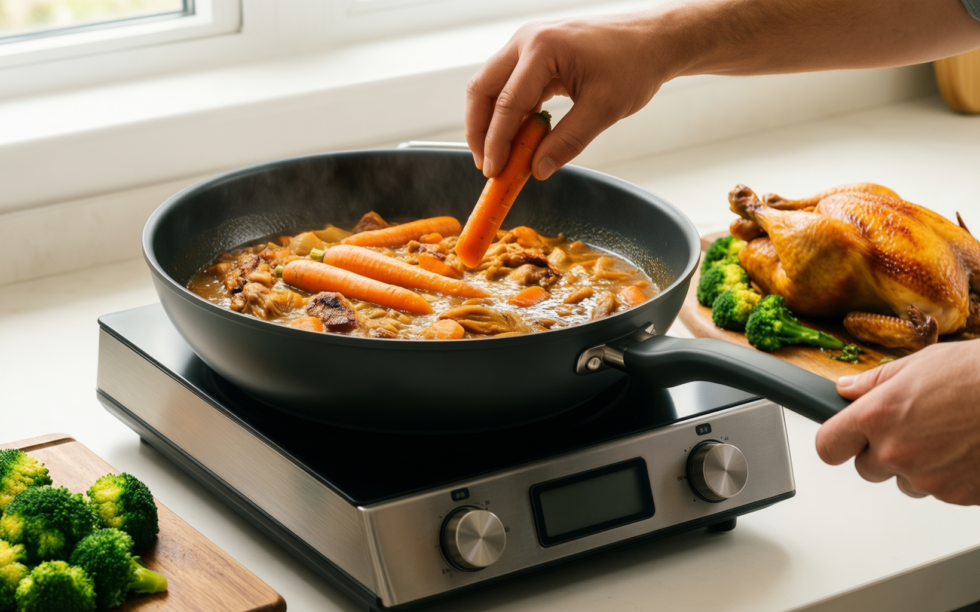
The depth of the pan is not just about liquid capacity; it also provides vertical space for larger pieces of food. This vertical dimension allows chunks of chicken and root vegetables to be layered without overcrowding. This is important because overcrowding leads to steaming rather than browning, which compromises the texture of the dish. With the extra depth, ingredients can be arranged in a single layer, ensuring that each piece has enough space to brown properly before the liquid is added.
This capability makes the pan versatile for different cooking styles. You can use it for quick sautés or for slow braises, and the depth accommodates both. It is a practical design choice that addresses a common limitation in standard frying pans. For cooks who want to do more with one pan, this feature is useful.
Why Your Induction Hob Might Not Work With This Pan
Many stainless steel pans are marketed as “all-hob” compatible, but this claim is not always accurate for induction cooktops. Induction hobs require a magnetic base to generate heat, and many stainless steel pans lack this property. The Bra Signature pan features a full induction diffuser base, which is specifically designed to work with induction hobs. This is a critical distinction that saves you from buying a pan that will not work on your primary cooking surface.
The magnetic base is designed to confirm induction readiness. A refrigerator magnet sticks firmly to the bottom, confirming that the pan is compatible with induction hobs. This is a simple but important check that can be performed before purchasing. If the magnet does not stick, the pan will not work on an induction hob, regardless of what the marketing claims say.
The 5.3mm thickness of the diffuser base also contributes to its efficiency on induction hobs. Thicker bases generally provide better heat transmission, which means less energy is wasted. This is particularly relevant for induction hobs, which are designed to be energy-efficient. By using a pan with a thick, magnetic base, you are maximizing the efficiency of your hob and reducing your energy consumption.
Confirming Magnetic Compatibility
The risk of buying a “stainless steel” pan that is not induction-ready is a common pitfall for many home cooks. Many pans are made from non-magnetic stainless steel, which will not work on induction hobs. The Bra Signature pan avoids this issue by using a triple diffuser bottom that includes a magnetic layer. This ensures that the pan is compatible with all heat sources, including induction, gas, electric, and ceramic.
This compatibility is a practical advantage for households that are in the process of upgrading their kitchen appliances. If you are planning to switch to an induction hob in the future, investing in a pan that is already compatible will save you from having to replace your entire cookware set. It is a forward-thinking choice that ensures your cookware remains useful for years to come.
Energy Efficiency and Heat Transmission
The large full induction diffuser base allows for better and more efficient heat transmission to the entire body of the pan. This means that the pan heats up faster, which reduces the time you spend waiting for it to reach the desired temperature. Faster heating also means less energy consumption, which is a benefit for both your utility bill and the environment.
The efficient heat transmission also results in more consistent cooking. Because the heat is distributed evenly across the base, there are fewer hot spots, which leads to more uniform browning and cooking. This is particularly important for dishes that require precise temperature control, such as sauces and stews. The pan’s design ensures that you get consistent results every time you cook.
Who Should Skip This Pan for a Standard Skillet
If you primarily cook single servings or quick meals like eggs and pancakes, this deep pan may be more than you need. The 24cm diameter is large, and the depth adds extra weight and bulk. For quick, light meals, a smaller, shallower pan would be more convenient and easier to handle. You would be using only a fraction of the pan’s capacity, which is inefficient and can lead to uneven cooking.
The weight of the pan is another factor to consider. Stainless steel pans are generally heavier than non-stick or aluminum pans. This weight can be a disadvantage for daily use, especially if you are cooking frequently or have wrist or arm issues. The riveted handle is sturdy, but the overall weight of the pan can make it tiring to hold for extended periods. If you are looking for a lightweight pan for everyday use, this may not be the best choice.
For those who primarily sear thin steaks or cook delicate foods, a shallow pan is often preferred. The deep walls of this pan can make it difficult to flip thin items, and the extra depth can cause the food to cook unevenly. A shallow pan allows for better control and more even browning, which is essential for achieving the perfect crust on a steak. If your cooking style focuses on high-heat searing of thin cuts, a standard skillet would be more suitable.
The Weight Penalty for Daily Use
The weight of the pan is a significant consideration for daily use. While the stainless steel construction ensures durability, it also adds heft. This can be a disadvantage if you are cooking frequently or have physical limitations. The riveted handle provides a secure grip, but the overall weight of the pan can make it tiring to hold for extended periods. If you are looking for a lightweight pan for everyday use, this may not be the best choice.
However, for those who do not mind the weight, the durability of the pan is a major advantage. Stainless steel is resistant to warping and corrosion, which means it will last for many years. This longevity is a benefit for those who are looking for a long-term investment in their cookware. The pan’s weight also contributes to its stability on the hob, which is an advantage for high-heat cooking.
Why Shallow Pans Are Better for Searing
For searing thin steaks or cooking delicate foods, a shallow pan is often preferred. The deep walls of this pan can make it difficult to flip thin items, and the extra depth can cause the food to cook unevenly. A shallow pan allows for better control and more even browning, which is essential for achieving the perfect crust on a steak. If your cooking style focuses on high-heat searing of thin cuts, a standard skillet would be more suitable.
The shallow design of a standard skillet also makes it easier to clean. The lower walls mean that there is less surface area to scrub, and the pan is easier to rinse and dry. This is a practical advantage for those who want to minimize their cleaning time. However, for those who are willing to put in the extra effort, the deep pan offers greater versatility and capacity.
How It Stacks Up Against Non-Stick Deep Fryers
Unlike typical non-stick deep fryers that rely on coatings to prevent food from sticking, this stainless steel pan relies on proper technique and heat management. Non-stick pans are convenient for low-fat cooking and easy cleanup, but they have limitations in terms of heat resistance and durability. The coating can degrade over time, especially if you use metal utensils or high heat. In contrast, the stainless steel construction of this pan is resistant to scratching and can withstand high temperatures without degrading.
The trade-off for using a stainless steel pan is that it requires more effort in cleaning. Food can stick to the surface if the pan is not heated properly or if you use too little oil. However, once you master the technique, the pan offers superior browning and flavor development. The Maillard reaction, which is responsible for the browned crust on meat and vegetables, occurs more effectively in stainless steel than in non-stick pans. This is because stainless steel can reach higher temperatures without damaging the coating.
Serious cooks often prefer stainless steel for high-heat browning because it allows for greater control over the cooking process. You can adjust the heat and the amount of oil to achieve the desired level of browning. This level of control is not possible with non-stick pans, which have a lower heat limit. If you are looking for a pan that can handle high-heat cooking and produce professional results, stainless steel is the better choice.
Durability vs. Convenience
The durability of stainless steel is a major advantage over non-stick coatings. Non-stick coatings can wear down over time, especially if you use metal utensils or wash the pan in the dishwasher. In contrast, stainless steel is resistant to scratching and can withstand the rigors of daily use. This means that the pan will last for many years, making it a more sustainable and long-term investment.
However, the convenience of non-stick pans is undeniable. They are easier to clean and require less oil for cooking. If you are looking for a low-maintenance pan for everyday use, a non-stick option may be more suitable. But if you are willing to put in the extra effort to maintain a stainless steel pan, the rewards in terms of durability and cooking performance are clear.
High-Heat Browning Capabilities
The ability to achieve high-heat browning is a key advantage of stainless steel pans. The Maillard reaction, which is responsible for the browned crust on meat and vegetables, occurs more effectively in stainless steel than in non-stick pans. This is because stainless steel can reach higher temperatures without damaging the coating. The result is a deeper, more complex flavor and a better texture.
This capability is particularly important for those who enjoy cooking with high heat, such as searing steaks or sautéing vegetables. The pan’s ability to withstand high temperatures without degrading ensures that you can achieve the perfect crust every time. This is a clear advantage over non-stick pans, which have a lower heat limit and can release harmful fumes if overheated.
Cleaning Stainless Steel Without Scratches
Cleaning a stainless steel pan requires a different approach than cleaning a non-stick pan. The lack of a non-stick coating means that food can stick to the surface, especially if the pan is not heated properly. However, with the right technique, you can clean the pan without scratching the finish. The first step is to let the pan cool down before washing it. This prevents thermal shock, which can warp the pan or damage the finish.
To remove burnt-on food, you can use a mixture of vinegar and boiling water. Fill the pan with the mixture and bring it to a boil. Let it simmer for a few minutes, then use a non-abrasive sponge to scrub the surface. The vinegar helps to break down the burnt-on food, making it easier to remove. This method is effective for stubborn stains and does not require the use of abrasive sponges, which can scratch the finish.
It is important to avoid using abrasive sponges or steel wool, as these can scratch the satin interior and bright exterior of the pan. Scratches not only affect the appearance of the pan but can also create areas where food can stick more easily. Instead, use a non-abrasive sponge or a soft cloth to clean the pan. This will help to maintain the finish and ensure that the pan remains in good condition for years to come.
Removing Burnt-On Food
The deep walls of the pan can make it difficult to reach all areas when cleaning. To ensure that you clean the entire surface, you can use a long-handled brush or a flexible sponge. This will allow you to reach the corners and edges of the pan without scratching the finish. It is also a good idea to rinse the pan thoroughly after washing to remove any residue.
If you have particularly stubborn stains, you can use a paste of baking soda and water. Apply the paste to the stained area and let it sit for a few minutes. Then, use a non-abrasive sponge to scrub the area. The baking soda acts as a mild abrasive, helping to lift the stain without scratching the finish. This method is effective for removing tough stains and restoring the pan’s appearance.
Maintaining the Finish
To maintain the finish of the pan, it is important to dry it thoroughly after washing. Water spots can form on the stainless steel surface, which can be difficult to remove. To prevent water spots, you can use a microfiber cloth to dry the pan. This will help to maintain the bright exterior and satin interior of the pan.
Regular maintenance is key to keeping the pan in good condition. By following these simple cleaning tips, you can ensure that the pan remains in excellent condition for years to come. The durability of the stainless steel construction means that with proper care, the pan will last for a long time, making it a worthwhile investment for your kitchen.
Final Verdict
The Bra Signature deep frying pan is a robust and versatile tool that excels in high-heat cooking and large-capacity braising. Its 5.3mm triple diffuser base ensures efficient heat distribution across all hob types, including induction, making it a reliable choice for modern kitchens. While the lack of a non-stick coating requires more diligent cleaning and proper technique, the durability and superior browning capabilities make it a worthwhile investment for serious home cooks.
Who this is perfect for:
- Home cooks who make large batches: If you regularly prepare family-sized stews, braises, or roasts, the 24cm diameter and deep walls allow you to cook everything in one vessel without overflow.
- Induction hob users: The confirmed magnetic base and thick diffuser ensure compatibility and efficient heat transfer on induction cooktops, which can be tricky with standard stainless steel pans.
- Cooks who prioritize durability: If you want a pan that resists warping, scratching, and corrosion over many years of use, the stainless steel construction is a practical long-term choice.
Who should choose alternatives instead:
- Those who cook single servings: If you mostly prepare quick meals for one or two people, the size and weight of this pan are excessive. A smaller, shallower skillet will be more convenient and easier to handle.
- Cooks with wrist or arm limitations: The weight of the stainless steel pan can be tiring to hold for extended periods. If you have physical limitations, a lighter non-stick or aluminum pan may be more suitable for daily use.
- Those who prefer low-maintenance cleaning: If you want a pan that rinses clean with minimal effort, the lack of a non-stick coating here will require more time and technique to clean, especially after high-heat browning.
🛒 Check Price on Amazon →✓ See today's price & reviews