De Buyer Affinity Stainless Steel Frying Pan 24cm: Review &…

#ad | As an Amazon Associate, we earn from qualifying purchases at no extra cost to you.
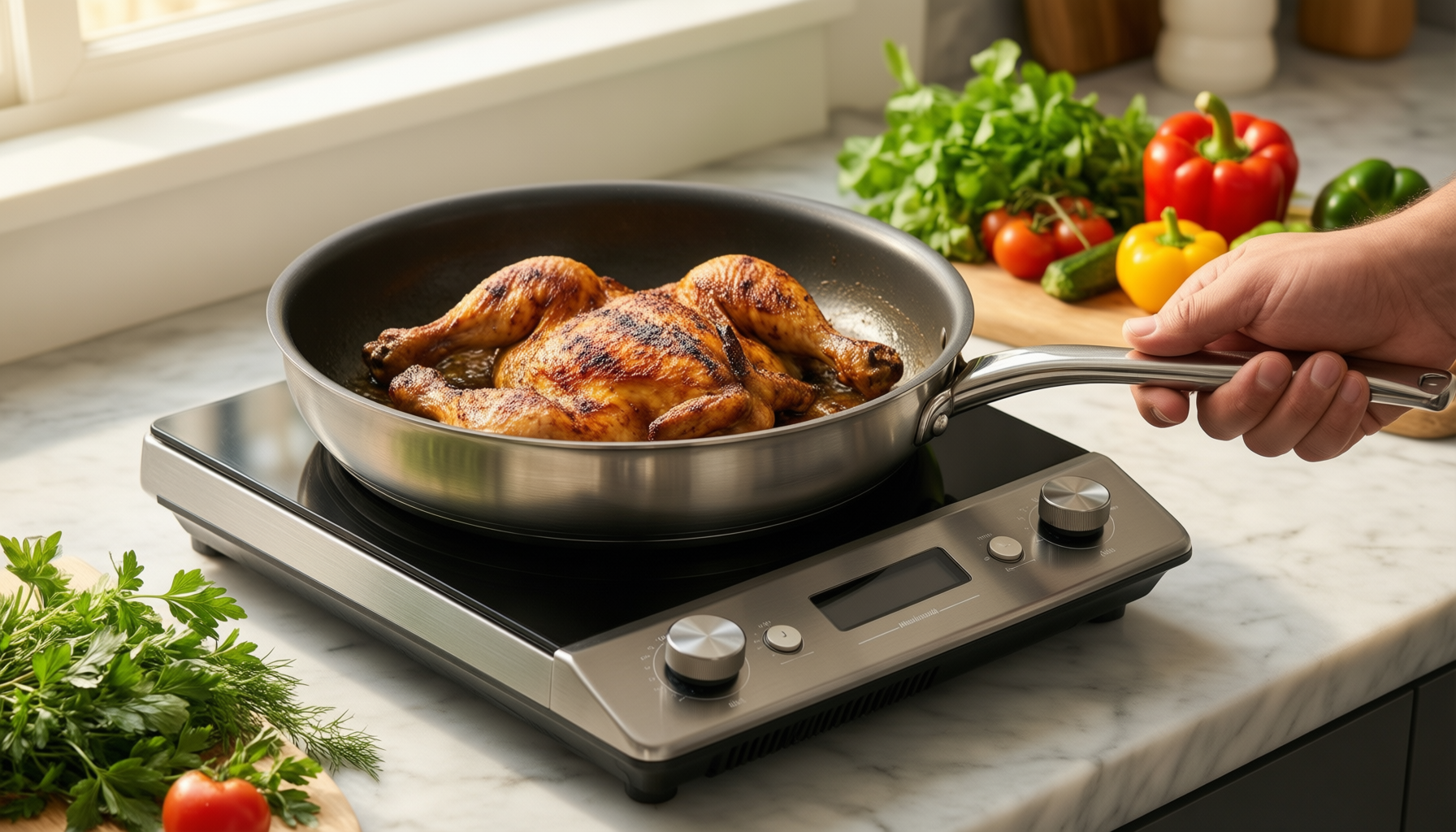
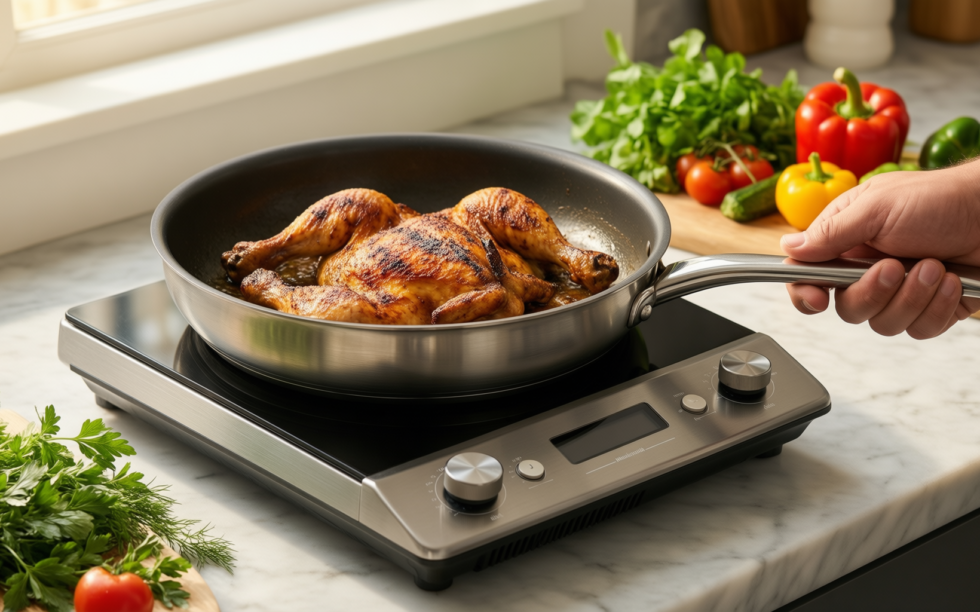
The De Buyer Affinity 24cm is designed for UK home cooks who need a reliable tool for searing on induction hobs without the common issue of localized hot spots. Its primary function is to provide a consistent surface temperature, achieved through a multi-layer construction that combines a stainless steel exterior with an aluminium core. This structure allows for a rapid temperature rise and an immediate heat cutoff when the pan is removed from the source, which is critical for controlling the Maillard reaction on electric and induction ranges.
However, this pan is not a non-stick cookware item. It requires proper technique and adequate fat to prevent food from adhering to the surface. The manufacturer explicitly positions this model for quickly frying and grilling meat, implying that the user must manage temperature and fat levels to achieve a good release. For buyers seeking zero-effort cooking or a surface that handles low-fat eggs and pancakes without sticking, this model presents a significant learning curve.
🛒 Check Price on Amazon →✓ See today's price & reviews
Verdict: This pan is best suited for home cooks who prioritize professional-grade searing performance and durability over the convenience of non-stick coatings. It is particularly effective for those using induction or electric hobs who need precise heat control. If you are looking for a low-maintenance, non-stick surface for everyday breakfast items, this is not the right choice.
Solving the ‘Sticking’ Problem on UK Induction Hobs
Many standard stainless steel pans fail on induction hobs because they lack sufficient thermal mass in the base, leading to uneven heat distribution. This often results in “hot spots” where food burns while adjacent areas remain undercooked, a common complaint among UK home cooks transitioning from gas to induction. The Affinity range tackles this by utilizing a multi-layer material composition that ensures even heat distribution throughout the skirt, rather than just the center of the base.
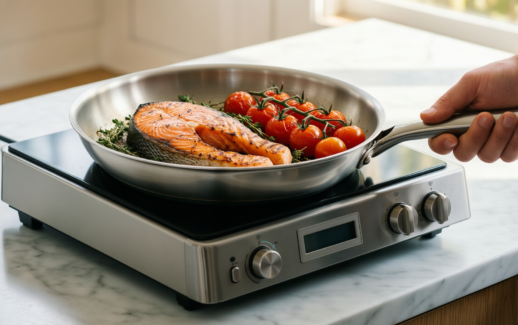
The specific mechanism at play here is the combination of stainless steel on the outside and aluminium on the inside. Aluminium is an excellent conductor of heat, allowing the pan to reach high temperatures quickly, while the stainless steel exterior provides durability and a non-reactive surface. This tri-ply structure means that when you place a steak or fish fillet in the pan, the heat is transferred uniformly across the contact surface, reducing the likelihood of localized sticking. For buyers who have struggled with food adhering to cheaper single-layer stainless pans, this construction offers a tangible improvement in release.
It is important to note that “non-stick” is not a feature of this product. The manufacturer explicitly states it is suitable for quickly frying and grilling meat, implying that the user must manage the Maillard reaction through temperature control. On induction hobs, which can sometimes overshoot the desired temperature, the ability to rapidly increase and stop cooking is crucial. The Affinity’s design allows for this precision, making it a reliable tool for searing tasks where consistent surface temperature is more important than a chemically non-stick coating.
The Role of the Aluminium Core
The inclusion of aluminium in the base is not merely a marketing term but a functional necessity for the performance claims made by the brand. Unlike solid stainless steel, which is a poor conductor, the aluminium layer acts as a heat distributor. This means that when the induction hob generates electromagnetic energy, the pan converts it into heat efficiently and spreads it laterally. For a 24 cm diameter pan, this lateral spread is critical because induction zones are often smaller than the pan itself, creating a natural gradient in heat intensity. The aluminium core helps mitigate this gradient, ensuring that the edges of the pan are as hot as the center, which is vital for browning food evenly.
Managing High-Heat Searing
Searing meat requires a surface temperature high enough to break down proteins and create a crust, but not so high that the fat burns before the meat cooks. The Affinity’s “super reactive material” description suggests it can handle these high temperatures without warping or degrading. The 2.8 mm thickness of the base provides enough mass to retain heat, allowing the pan to stay hot even when cold food is added. This thermal inertia is a key differentiator from thinner, lighter pans that cool down rapidly upon contact with food, leading to steaming rather than searing. For UK cooks using high-output induction hobs, this stability allows for more predictable results in high-heat applications.
Who Should Skip This Pan: The Non-Induction and Non-Nonstick Buyer
This product is not suitable for buyers who require a non-stick surface for low-fat cooking or for those who lack the technique to manage stainless steel. The description explicitly notes that occasional polishing is required to restore the original shine, indicating that the surface will show signs of use, such as water spots or discoloration, if not maintained. If you are looking for a pan that can cook eggs or pancakes with minimal oil and clean up easily in the dishwasher without any aesthetic degradation, this model will likely disappoint. The “hygienic: dishwasher safe” claim refers to the material’s resistance to corrosion, not its ability to remain pristine after every wash.
Buyers who rely exclusively on gas hobs and prefer the immediate visual feedback of flames may also find this pan less intuitive. While the Affinity is suitable for all heat sources, the “instant stop cooking” feature is most beneficial on electric and induction hobs, which have slower response times than gas. On gas, the immediate control of the flame makes the rapid heat rise of the aluminium core less critical, and some cooks prefer the lighter weight and different heat dynamics of carbon steel pans. If your kitchen setup is entirely gas-based and you are accustomed to the specific feel of carbon steel, the Affinity’s heavier, more reactive nature may feel like a step backward in terms of control.
Additionally, those who want a zero-maintenance utensil should look elsewhere. The requirement for “occasional polishing with polishing paste” means that the mirror finish will not last indefinitely without care. Water spots from hard water, common in many UK regions, will appear on the surface and require manual removal. If you prefer a brushed finish that hides water spots better or a non-stick coating that requires no polishing, this product does not meet those preferences. The aesthetic appeal of the “high-end mirror polishing” is a trade-off for the maintenance effort required to keep it looking new.
The Technique Barrier
Cooking with stainless steel requires a different approach than non-stick cookware. You must preheat the pan thoroughly and use enough fat to create a barrier between the food and the metal. The Affinity’s rapid temperature rise means that if you do not preheat correctly, you risk overheating the pan before adding food, which can lead to sticking. This learning curve is a significant factor for beginners. If you are not willing to invest time in learning how to manage heat and fat, the frustration of food sticking may outweigh the benefits of the pan’s performance.
Maintenance Expectations
The mirror finish is a double-edged sword. While it looks elegant, it is highly visible to any imperfections. Hard water stains, salt residue, and oil splatters will all be apparent and require regular polishing to maintain the “modern and elegant design” described in the product details. This is not a “set and forget” pan. It requires a commitment to cleaning and polishing to preserve its appearance. If you prefer a pan that looks good even after a quick rinse, the brushed or satin finishes of other brands might be more practical for your lifestyle.
Tri-Ply Construction vs. Premium Alternatives
The Affinity’s multi-layer construction places it in a competitive position against premium brands like All-Clad, which also use tri-ply stainless steel. However, the key difference lies in the specific alloy composition and the thickness of the base. The Affinity has a base thickness of 2.8 mm, which is substantial enough to provide good heat retention without being excessively heavy. In comparison, some premium brands use thicker bases, which can make the pan heavier and slower to heat up. The Affinity’s design prioritizes reactivity, allowing for faster temperature changes, which is beneficial for quick cooking tasks.
The weight of the pan is another factor to consider. While the exact weight is not specified in the description, the 2.8 mm thickness and 24 cm diameter suggest a moderate weight that is manageable for most users. The riveted stainless steel cast-iron tail provides a comfortable grip, which is a significant advantage over pans with plastic or wooden handles that can overheat or degrade over time. The cast-iron tail is durable and integrates well with the stainless steel body, ensuring that the handle does not become a weak point. This construction is a step up from cheaper pans that use riveted plastic handles, which can loosen or burn.
For UK buyers seeking professional results without the premium markup, the Affinity offers a compelling balance. It provides the core benefits of tri-ply construction—even heat distribution and durability—without the high price tag associated with luxury brands. The “good quality stainless steel” description indicates that the material is robust and resistant to corrosion, which is essential for long-term use. While it may not have the same brand prestige as some competitors, the functional performance is comparable, making it a strong choice for those who prioritize utility over status.
Handle Ergonomics and Grip
The riveted stainless steel cast-iron tail is a notable feature that sets this pan apart from many competitors. Unlike plastic handles, which can melt or degrade under high heat, the cast-iron tail is durable and can be used to lift the pan directly from the hob. This is particularly useful for tasks like flambéing or pouring liquids, where a secure grip is essential. The rivets ensure that the handle is firmly attached to the pan, preventing it from loosening over time. This design choice reflects a focus on durability and functionality, which is appreciated by serious home cooks.
Weight and Maneuverability
The 24 cm diameter and 4 cm height make this pan a versatile size for everyday cooking. It is large enough for searing multiple pieces of meat or cooking a large fish fillet, but small enough to fit on standard UK induction zones. The 2.8 mm base thickness provides enough weight to ensure stability on the hob, preventing the pan from sliding around during cooking. However, the weight may be a consideration for those with wrist issues or who prefer lighter cookware. The balance between weight and reactivity is a key aspect of the Affinity’s design, allowing for precise control without sacrificing thermal performance.
Managing Heat Spots: A Guide to Even Cooking on Electric Ranges
One of the most common challenges with stainless steel pans on electric and induction hobs is the creation of heat spots, where certain areas of the base become significantly hotter than others. This can lead to uneven cooking, with some parts of the food burning while others remain undercooked. The Affinity’s multi-layer construction helps mitigate this issue by distributing heat evenly across the base. However, users should still be mindful of the size of their induction zone relative to the pan’s diameter. If the induction zone is smaller than the 24 cm pan, the center will heat up faster than the edges, creating a gradient.
To manage this, it is recommended to preheat the pan gradually, as suggested by the product tip. This allows the heat to distribute evenly before adding food. Once the pan is at the desired temperature, you can add the food and adjust the heat as needed. The “instant stop cooking” feature is particularly useful here, as it allows you to quickly remove the pan from the heat source if you notice that the temperature is rising too quickly. This level of control is essential for achieving consistent results on electric and induction hobs, where the response time is slower than on gas.
For those transitioning from non-stick to stainless steel, it is important to adjust your cooking technique. Non-stick pans are forgiving of temperature fluctuations, while stainless steel requires more precision. You must learn to read the pan’s surface, looking for signs that it is at the correct temperature, such as the behavior of water droplets. This skill takes time to develop, but the Affinity’s reactive material makes it easier to practice and refine your technique. The even heat distribution provided by the tri-ply base ensures that once you master the technique, you will achieve consistent results.
Preheating Techniques
Preheating is a critical step in cooking with stainless steel. The Affinity’s rapid temperature rise means that it can reach high temperatures quickly, but it is important to preheat gradually to avoid creating hot spots. Start with a low heat setting and allow the pan to warm up slowly. Once it reaches the desired temperature, you can increase the heat if needed. This gradual approach ensures that the heat is distributed evenly across the base, reducing the risk of sticking and burning.
Adjusting for Induction Zones
If your induction hob has a smaller zone than the 24 cm pan, you may need to adjust your cooking technique to account for the heat gradient. One strategy is to place the food in the center of the pan, where the heat is most intense, and move it to the edges as it cooks. This allows you to take advantage of the higher temperature in the center for searing and the lower temperature at the edges for finishing. The Affinity’s even heat distribution makes this technique easier to execute, as the temperature difference between the center and edges is less pronounced than in single-layer pans.
Long-Term Durability: Cleaning and Maintaining the Affinity Line
The durability of the Affinity pan is a key selling point, with the description highlighting its “undeformable” nature and high-quality stainless steel construction. However, maintaining the mirror finish requires regular care. The product description recommends occasional polishing with polishing paste to restore the original shine. This is essential for preventing water spots and discoloration, which are common issues with stainless steel, especially in areas with hard water. Regular polishing not only improves the appearance of the pan but also helps to protect the surface from corrosion.
Cleaning the pan after each use is straightforward, as it is dishwasher safe. However, hand washing is recommended to preserve the mirror finish. Use a mild detergent and a soft sponge to clean the pan, avoiding abrasive cleaners that can scratch the surface. After washing, dry the pan immediately to prevent water spots. If water spots do appear, use a small amount of polishing paste to remove them. This routine ensures that the pan remains in excellent condition for years to come.
Storing the pan properly is also important to prevent damage. Avoid stacking heavy items on top of the pan, as this can cause the base to warp over time. Store the pan in a dry place to prevent rust, although the stainless steel construction makes it resistant to corrosion. The riveted handle is durable and should not require special care, but it is a good idea to check the rivets periodically to ensure they are secure. By following these simple maintenance tips, you can extend the life of your Affinity pan and enjoy its performance for many years.
Preventing Discoloration
Discoloration is a common issue with stainless steel pans, especially when exposed to high heat or acidic foods. To prevent this, avoid cooking acidic foods like tomatoes or wine in the pan for extended periods. If discoloration does occur, it can often be removed with a mixture of baking soda and water. Apply the paste to the affected area, let it sit for a few minutes, and then scrub gently with a soft sponge. This method is effective for removing light discoloration without damaging the finish.
Storage and Handling
Proper storage is crucial for maintaining the integrity of the pan. Avoid hanging the pan by the handle, as this can cause the rivets to loosen over time. Instead, store the pan in a cabinet or on a rack, ensuring that it is not subjected to excessive pressure. The 24 cm size makes it easy to store in most kitchens, and the sleek design allows it to blend in with other cookware. By treating the pan with care, you can ensure that it remains a reliable and durable tool in your kitchen for years to come.
🛒 Check Price on Amazon →✓ See today's price & reviews